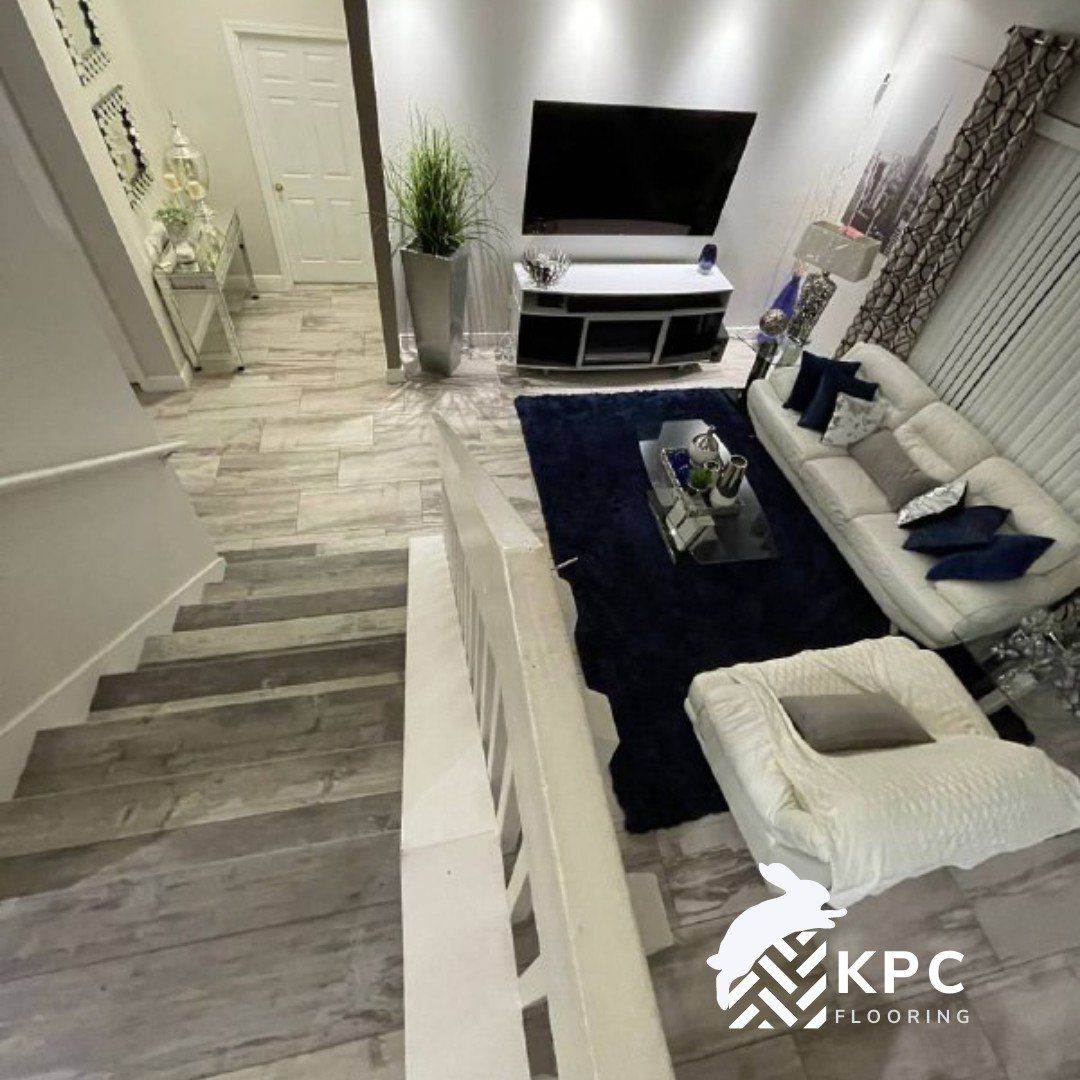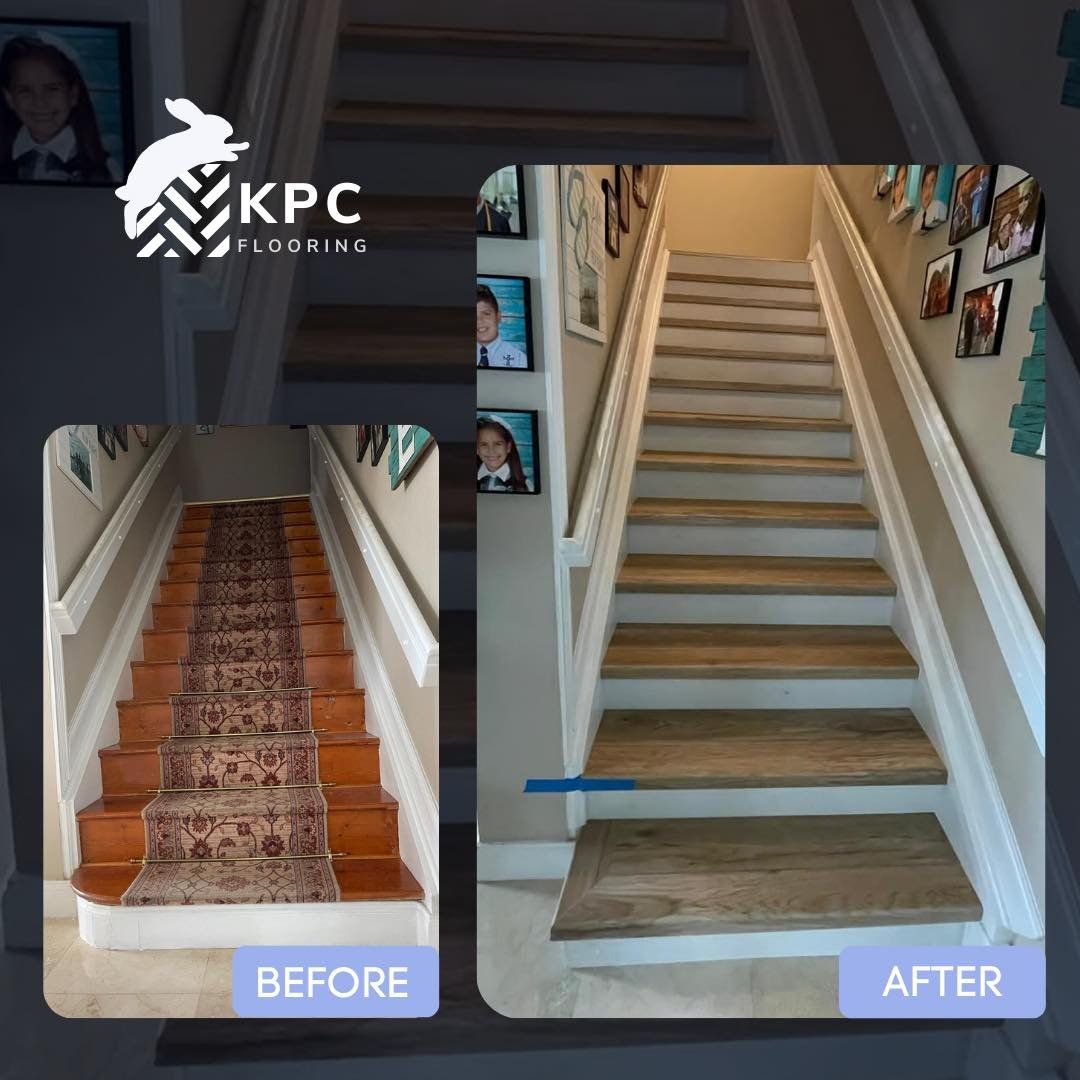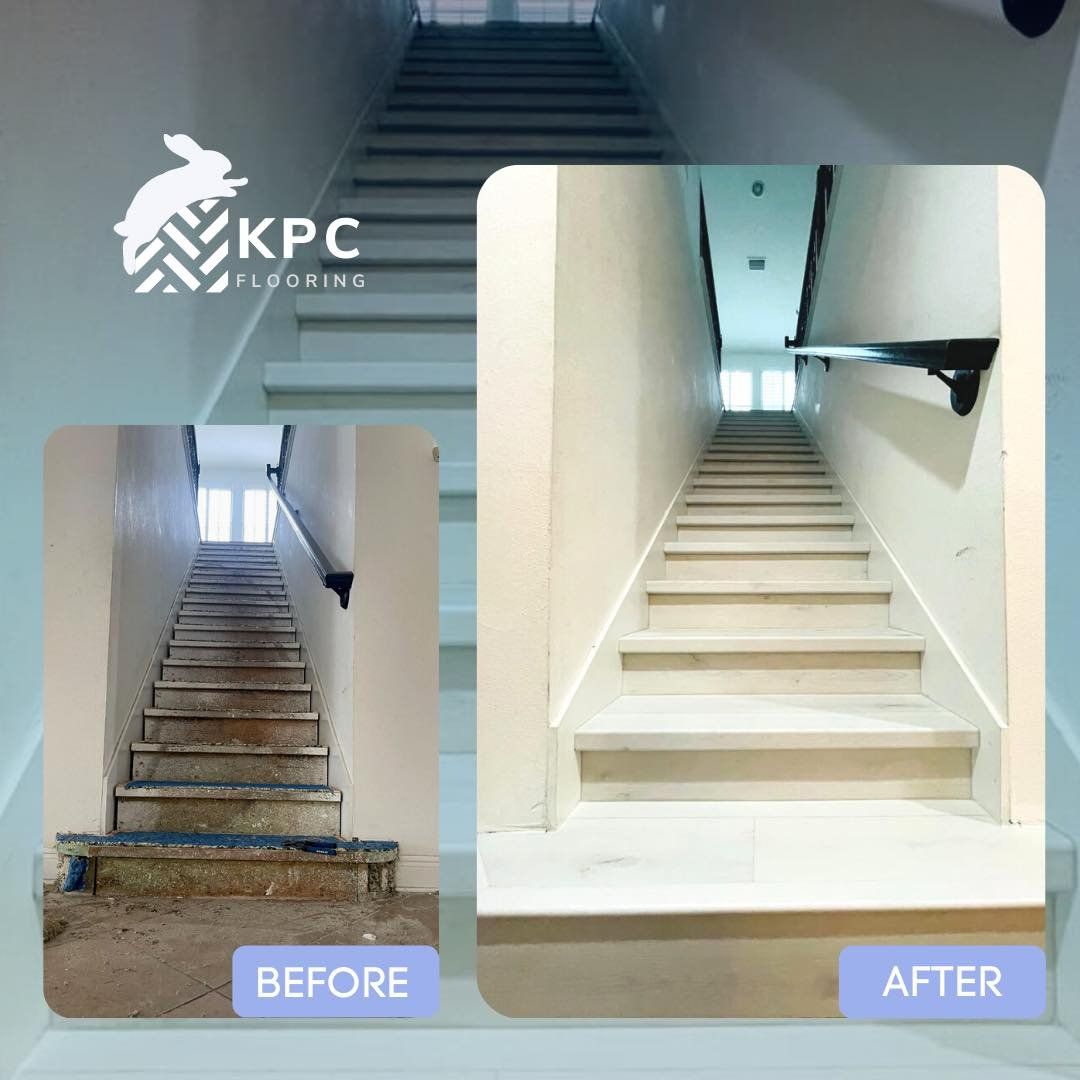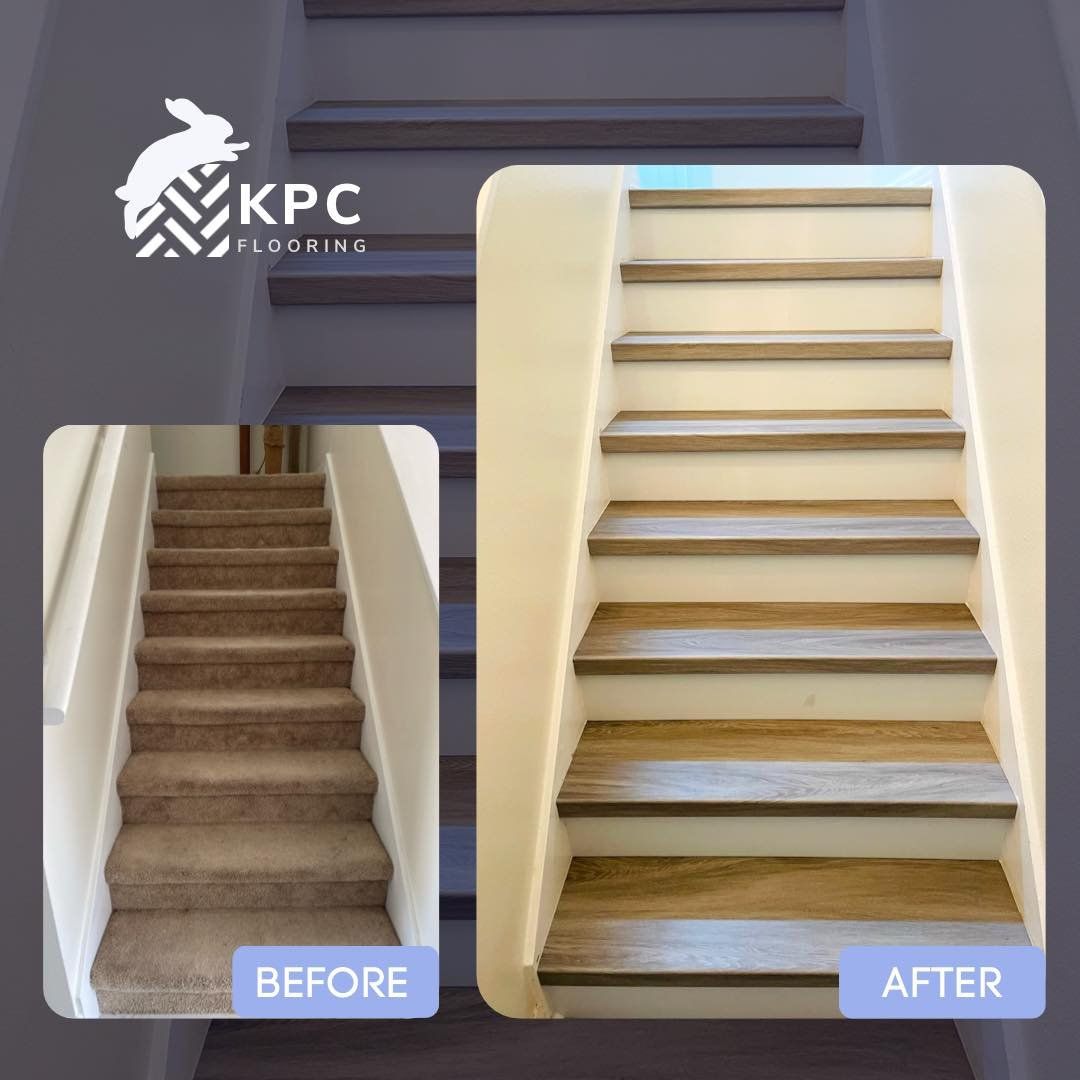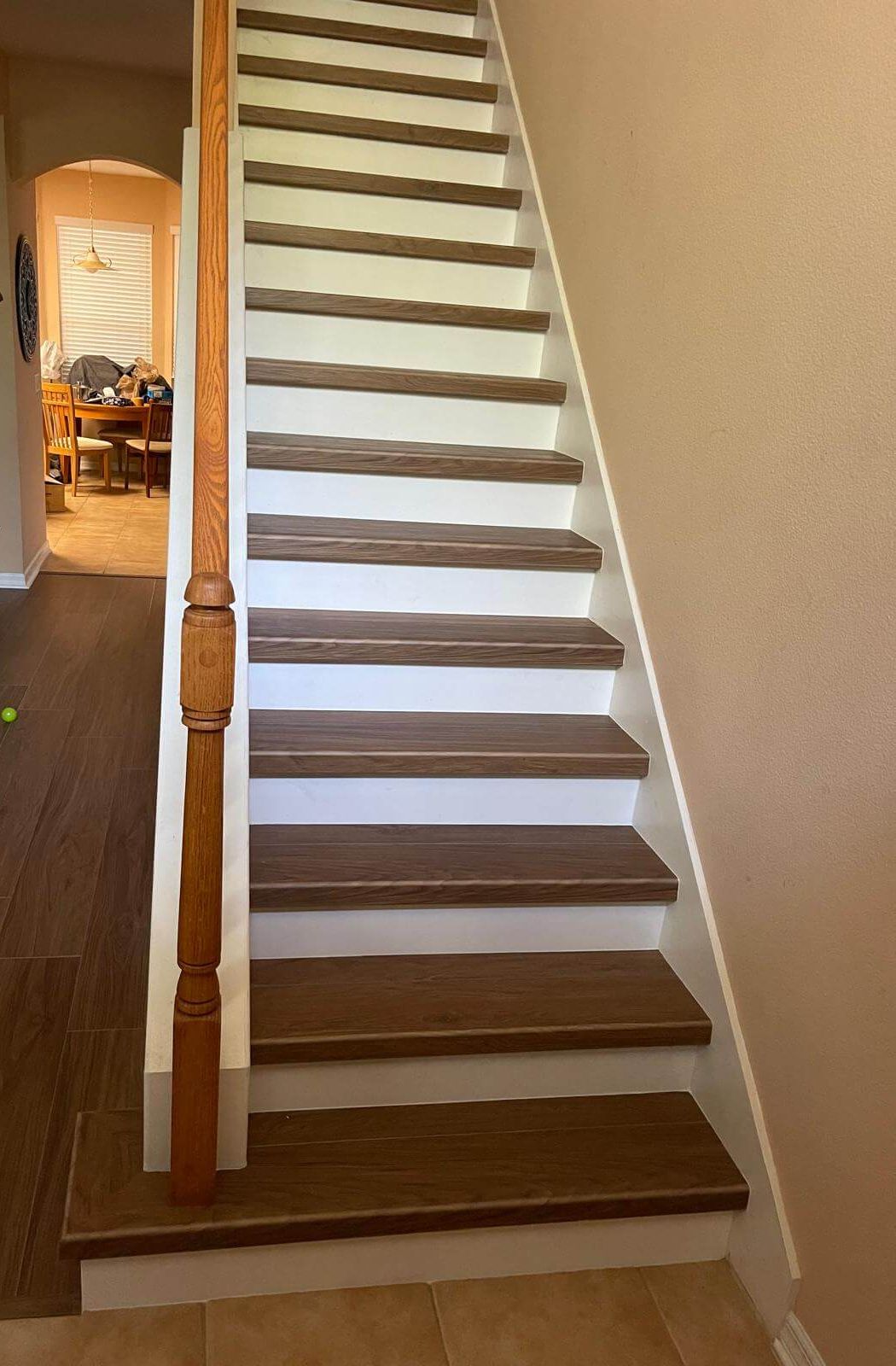
Completed 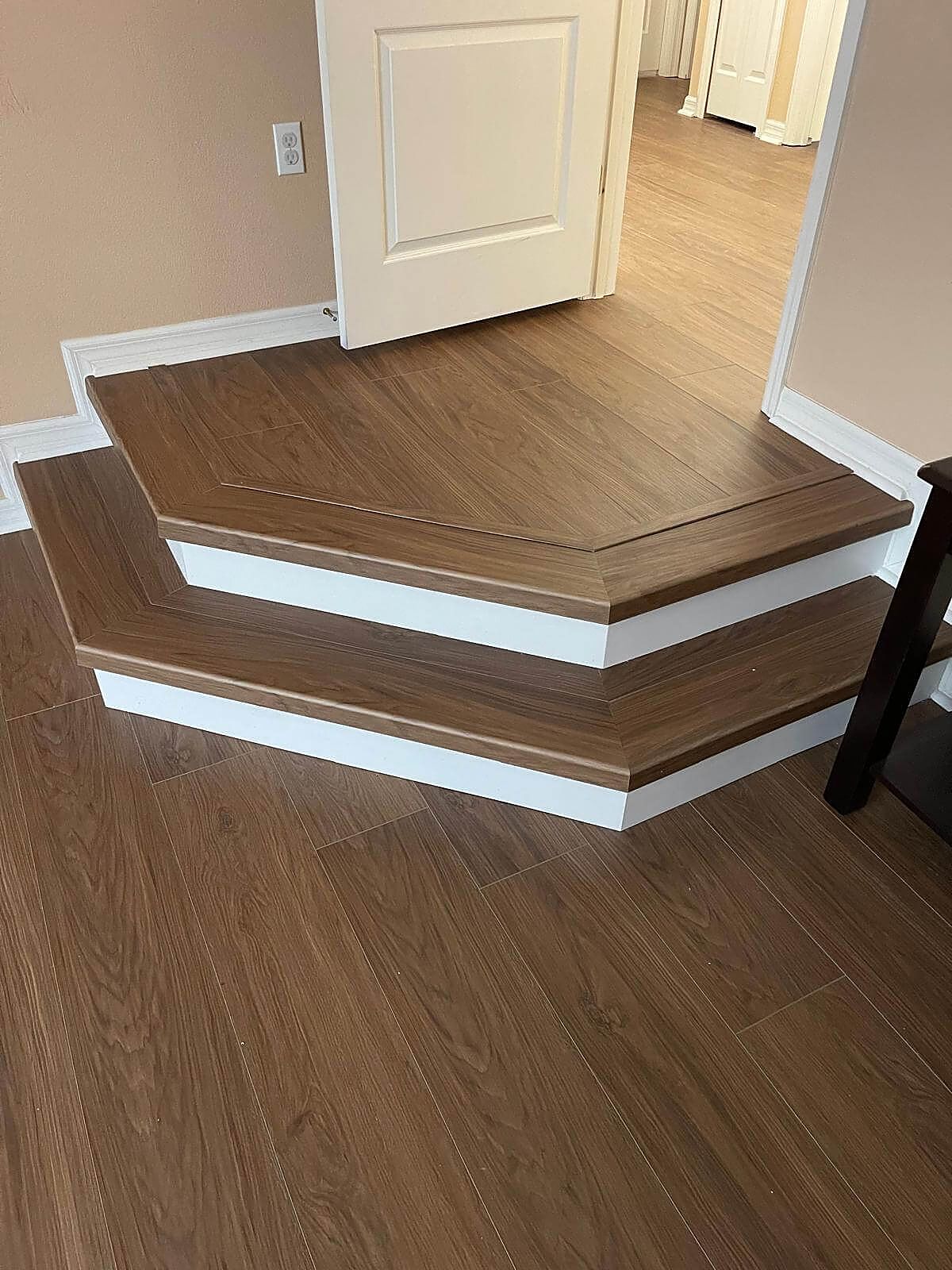
Completed 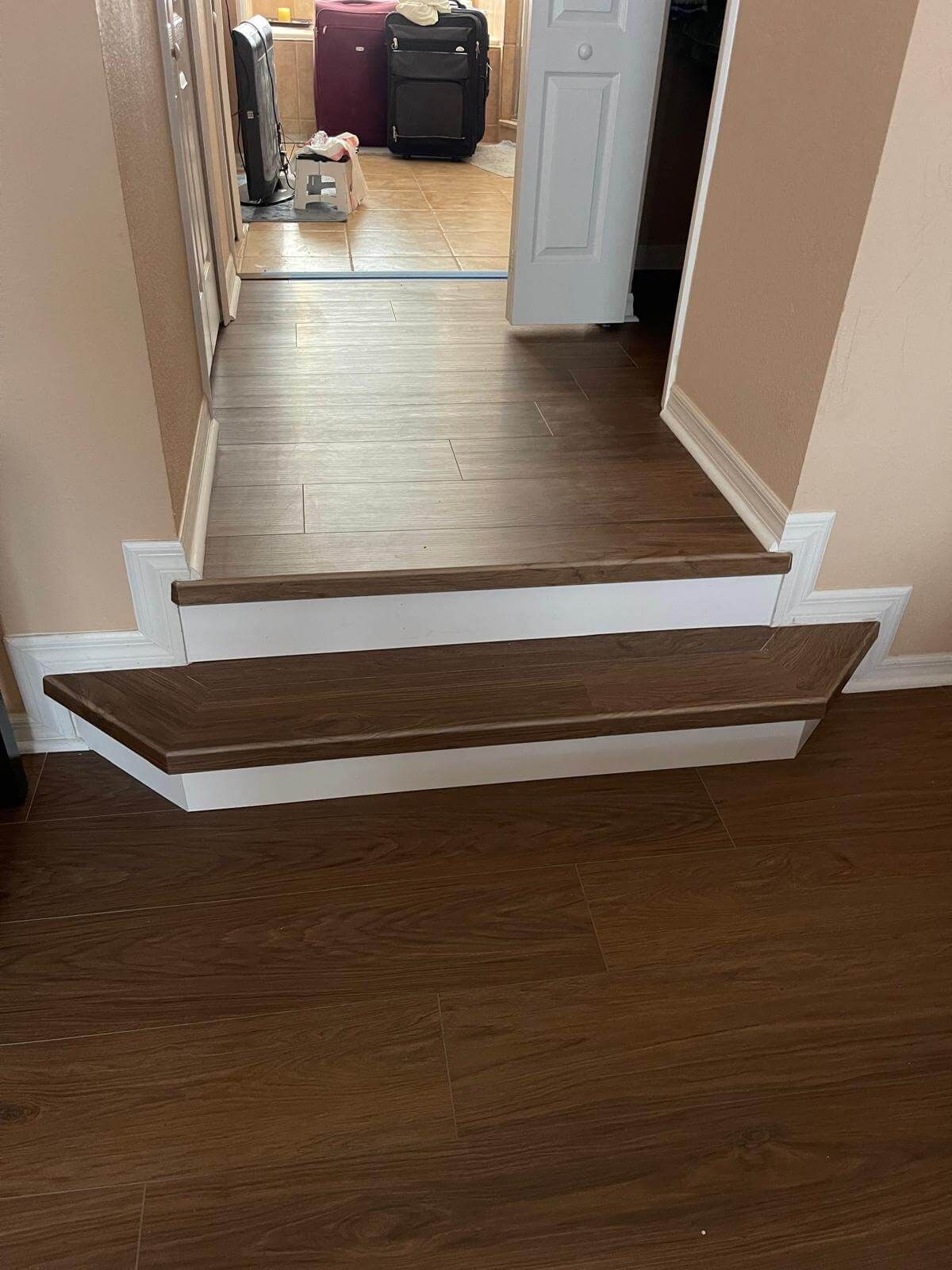
Completed
1 / 3
Stair and Landing Vinyl Plank Installation
Serving Apopka and Greater Orlando
3 photos · Completed
Our specialty
Carpeted steps redone in hardwood or vinyl, one tread at a time.
KPC Flooring redoes staircases in Orlando and nearby cities, replacing worn carpet with hardwood or vinyl. Stairs are our specialty.
Stair carpet wears out first at the front edge of each step, where every foot lands, and it's the hardest spot in the house to vacuum. Once it's pulled up, most staircases still have a sound frame underneath; the job is to give each step a finished surface that stays put.
Carpet, pad, tack strips and every staple come out. Each old step is cut back where needed and cleaned, and the new tread and riser go on top. The result is a staircase that continues a hardwood or vinyl plank floor instead of interrupting it.
Many installers fasten a new tread with a few beads of construction adhesive from a tube. We do it differently: after cutting and cleaning the step, we spread flooring adhesive over its entire surface with a trowel and set the tread into that full bed.
That one choice solves three problems at once. It levels the step, it fills any hole or dip in the middle of the old tread, and it bonds the new surface across its whole area, so the step feels solid underfoot and is less likely to come loose.
A finished step has three visible parts. The tread is the flat part you walk on. The riser is the vertical face between steps. The nosing is the rounded or squared front lip of the tread, and it takes more wear than anything else on the staircase.
How those parts are finished decides whether a staircase looks built-in or covered over. Tread color usually follows the floor at the top or bottom; some homeowners want risers that match, others prefer a white riser for contrast. Landings are normally done in the tread material so the run reads as one piece. We go over these choices when we see your stairs.
Laying a new tread on top of an old one adds thickness to every step. Mid-run every rise stays equal, but the bottom rise grows and the top rise shrinks by that amount, and uneven risers are a classic trip hazard; building codes limit how much one riser may differ from the next. That's why the old bullnose is cut off, the added thickness is kept small, and the first and last steps get extra attention, so each new nosing lands where your foot expects it.
Our team answers the calls, comes to look at your staircase and does the stair work.
KPC Flooring has already served customers of Empire Today, Lowe's, 50 Floor and Lennar.
"Stair remodel" can mean rebuilding the staircase itself, with new stringers or a new layout. That's structural carpentry, which we don't take on. What we do keeps the existing frame and gives every step a new surface, sometimes called refacing or stairs covering. If your stairs feel solid but the carpet is shot, that's usually what you're after.
Doing the floor at the same time? See vinyl plank installation, hardwood floor installation or laminate flooring installation. When both are done together, the color carries from the hallway down the steps, and the top and bottom transitions are planned as part of the run.
Fresh treads can make an old railing look tired. Railing updates can be part of a stair project: if you'd like the handrail or balusters changed along with the steps, mention it when you call, and we'll look at the railing during the visit and include it in the plan for your staircase.
Stairs are priced per staircase, not per square foot, because the labor is in every cut and every edge. A straight run between two walls is the simplest; an open side, where each tread end shows, needs a finished return; winding or curved steps need every tread shaped individually.
You get the breakdown for your staircase during a free in-home estimate.
Finished staircases and project videos from KPC jobs.
Serving Apopka and Greater Orlando
3 photos · Completed
It depends on the number of steps, landings, open sides, winding steps, the material and how much fixing the old steps need. Since no two staircases are alike, we price yours after seeing it.
Yes. Carpet, pad, tack strips and staples come out, each step is cut back and cleaned, and the new treads go on in a full bed of adhesive.
Vinyl is a natural choice when the floor around the staircase is vinyl plank. Vinyl and laminate both need stair-specific nosing pieces at the front edge. Tell us what's on your floors and we'll talk through the options at your staircase.
The front lip of each tread, the part your foot rolls over. It takes the most wear, so it has to be well secured and cleanly finished, matched to the tread.
Usually the risers get new faces so they look finished next to the new treads. Risers that match the treads and white risers for contrast are both common looks; we go over them with you.
A full bed of flooring adhesive spread with a trowel levels the step, fills holes or dips in the old tread and grips the entire surface. The step feels solid and is less likely to loosen over time.
It depends on the number of steps, landings and how much prep the old stair needs. We'll tell you how many days to plan for once we've seen it.
Access is limited while steps are open and while the adhesive sets. If the staircase is the only way upstairs, tell us early so the order of the work accounts for it.
Railing updates can be part of a stair job. Tell us what you'd like changed when you call, and we'll look at it during the visit.
No. We work on existing staircases, giving the steps a new surface. Rebuilding the structure is carpentry outside our work.
Yes. You can book the staircase alone, or have it done in the same project as a new floor.
Have a question that is not answered here? Call and ask — se habla español.
Call (407) 427-8271Call (407) 427-8271. Tell us how many steps you have and what's on them now.